
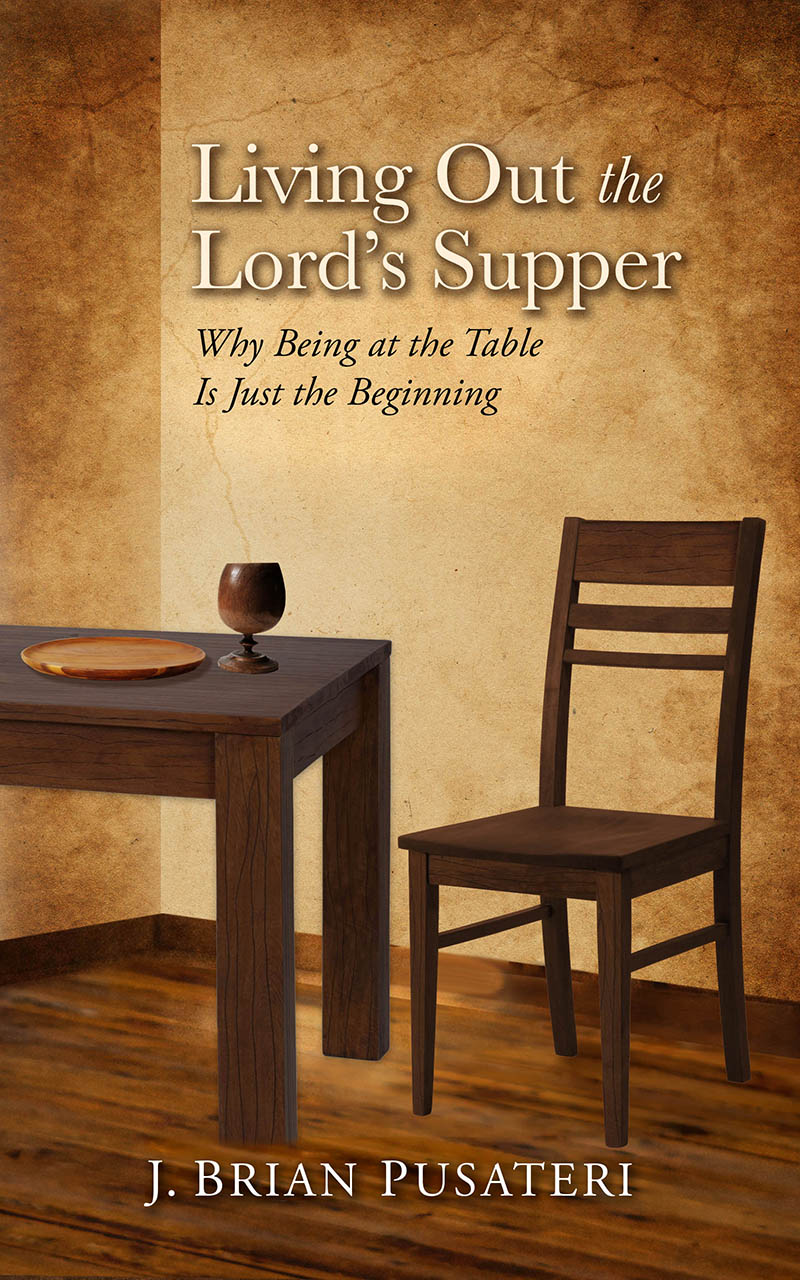
About the Book
Christians view and practice the Lord’s Supper differently. Despite these differences, faith remains, and belief is sincere. What unites believers across these traditions is a shared question: How does the table shape the life that follows? For many, that connection can feel unclear.
This book begins with a simple conviction: The Lord’s Supper was never meant to be an ending. It was meant to be a beginning.
On the night He gathered with His disciples, Jesus did something strikingly simple. He took bread, blessed it, broke it, and shared it. Those movements reveal more than a moment in Scripture. They reveal a pattern — a rhythm meant to shape how believers understand their identity, their healing, and their calling in the world.
We are taken — chosen by God and held in His hands.
We are blessed — met with mercy we did not earn.
We are broken and wounded — by our own failures and by life in a fallen world.
And we are shared — sent outward so that what God has done in us might bring hope to others.

About the Author
Brian is a Christian author and speaker. Brian, a lifelong Catholic, felt his life was forever changed when God spoke to his heart while attending an eight day silent Christian retreat in November of 2011. Soon after that retreat Brian founded 4th Day Letters and Broken Door Ministries. With the God inspired message of mercy and unconditional love that was placed on his heart during that retreat, Brian has been impacting others all over the country and around the world with his weekly letters, his talks, and his all-day Christian retreats. Brian’s life was again impacted in a very dramatic way in June of 2014 when he temporarily lost his eyesight and was diagnosed with a very rare incurable neurological illness, MOG Anitbody Disease. This health challenge has only served to draw Brian closer to God and bolster the importance of this timely yet ageless message.
What People Are Saying
“Living Out the Lord’s Supper moves Communion beyond a church ritual and into everyday life. It offers practical spiritual reflection that gently challenges us to live the rhythm of Christ. Communion becomes not only remembrance, but mission.”
— Doug B., Florida
“A wonderful exploration of how the Lord’s Supper is a beginning, not an end. The author has a gifted way of relating the rhythm of the Table to our personal spiritual growth. I gained a deeper appreciation for how God’s grace moves through our brokenness into the world.”
— Paul C., North Carolina
“This book is destined to become a devotional classic that will enrich every Christian who reads it. Many have wondered why Jesus instituted the Lord’s table and what it means. This book provides the answer – not just in theological terms, but in real, living terms for all of those who are called, blessed, broken and shared by God for God’s world.”
— Mark A., Ohio
Chapter 1
When Everyone Else Looks Fine
Sunday mornings have a way of making us believe that everyone else has life figured out. We file into church dressed nicely and smiling, greeting one another in the hallway, settling into our favorite seats. From a distance, it looks like a community of confident, steady Christians who showed up ready to worship. If someone had taken a photograph of the congregation at that moment, most of us would look peaceful, composed, and put together. But photographs can be deceiving. They capture faces, not stories. They show expressions, not burdens.
If we could see beneath the surface of those Sunday morning smiles, we might discover something else entirely. We might find a young father silently worried about losing his job, a woman grieving a diagnosis she hasn’t yet spoken aloud, a teenager carrying the weight of social pressure, or a couple barely holding their marriage together. We might see someone battling a temptation they’ve wrestled with for years, someone longing for forgiveness, or someone who feels invisible even while surrounded by people they love. We might encounter someone still carrying the scars of childhood trauma. We might even see a person who appears cheerful in every outward way but quietly feels spiritually numb, wondering why their faith seems to be moving in reverse.
The truth is, there is no person in any sanctuary who is completely untouched by brokenness or woundedness. Some of us recognize it readily. Others would never use those words to describe themselves. But whether we see it or not, every one of us carries something. Some carry the weight of choices they regret, choices that have left a mark on their lives. Others carry wounds they never asked for and never deserved, wounds inflicted by the loss of someone precious, by the betrayal of someone trusted, or by the harsh circumstances of living in a broken and unpredictable world.
Brokenness and woundedness are not the same thing, yet they live side by side in the human heart. Brokenness grows from the mistakes we make, the sins we commit, and the patterns we fall into again and again. It shows up in the ways we speak sharply when we meant to be gentle, the temptations we thought we had defeated only to find them returning, or the resolve that fades the moment we walk out of church. These are the places where we know we’ve contributed to our own struggles, where we wish we had acted differently, and where we quietly wonder if God is disappointed in us.
Woundedness, on the other hand, grows from the things that happen to us. These are the moments when life shifts in ways we never expected and never wanted. A child’s accident. A spouse’s illness. The slow ache of grief that lingers for years after a funeral. The sudden collapse of a friendship that once felt unshakeable. The loneliness that arrives without warning and stays longer than we hoped. The lingering ache of childhood traumas. These wounds are not our fault, yet they settle deep within us, shaping our fears, our hopes, and sometimes even our faith.
Some people readily acknowledge their brokenness. They know the struggles they face. They can describe the patterns that trip them up every time. But many people have difficulty recognizing or admitting the wounds they carry. Pain has a way of convincing us to stay silent. Grief teaches us to whisper. Trauma makes us bury the story so deeply that we sometimes forget it is still shaping our hearts. Even people whose lives appear calm and orderly on the surface may be carrying wounds that have never been spoken aloud.
This book is not written only for people who feel wounded, nor is it written just for those who recognize their brokenness. It is written for every believer who longs for a more authentic walk with Christ but sometimes finds themselves wondering why transformation seems slow or why certain struggles refuse to disappear. It is written for the person who has confessed the same sin a thousand times yet cannot seem to escape its shadow. It is written for the one who believes in God’s love but has difficulty believing that His mercy could reach the hidden corners of their own heart. And it is written for those who feel strong and steady, who may not yet realize how the quiet places of their lives are shaping them in ways they have never examined.
Over the years, as I’ve interacted with countless people seeking to grow in their faith, I began noticing a consistent pattern. People often confessed their struggles to God but rarely spoke about them to anyone else. They prayed about their temptations. They felt guilty after failing. They asked God for forgiveness, sincerely and wholeheartedly. Yet they remained stuck. And the longer they stayed silent, the more their struggles tightened around them, as though secrecy itself gave their battles strength.
I began to understand that silence has a way of convincing us that we are alone, and loneliness has a way of convincing us that we cannot change. But something remarkable happens when a person begins to speak their truth out loud. When a man admits the pattern he has been hiding for years, something shifts inside him. When a woman finally names the grief she has carried since childhood, the heaviness in her chest begins to lift. When a teenager opens up about the fear they have been pretending not to feel, their heart finds room to breathe. Stories lose their power to control us when they are brought into the light. Pain loses its grip when it is shared. And sin, when spoken honestly, begins to loosen its chains.
Yet speaking honestly does not come naturally to most of us. We fear being judged. We fear being misunderstood. We fear being defined by our worst moments or our deepest wounds. And so, we hold everything inside, hoping no one will notice that we are not as composed as we appear. But while secrecy may protect our image, it does not protect our hearts. Healing requires honesty. Transformation requires truth. And truth begins with recognizing that we are not the only ones who struggle.
In the retreats I lead, participants are invited to write down their wounds on one side of a small purple paper. On the other side of that paper, I ask them to write down their most frequently recurring sin. These papers are not shared. I tell them to put them in their pocket or purse. Near the end of the retreat, I ask everyone to look around the room. Each attendee has a small piece of purple paper listing their hidden wounds and brokenness. People begin to see that they are sitting in what I call a “sea of purple.” It is a simple image, yet it carries a profound message: you are not alone. Every person in the room carries something. Every heart has cracks. Every journey has places of darkness. We may not see those places in each other on a Sunday morning, but that does not mean they are not there.
When Jesus gathered with His disciples on the night of the Last Supper, He revealed a pattern that speaks to the heart of every believer. He took bread, blessed it, broke it, and shared it. Those four movements hold a deep and quiet truth about what God desires to do in each of our lives. He chooses us, blesses us, meets us in our brokenness and woundedness, and then shares us with the world so that others may discover the hope we have found.
This pattern does not begin with perfection. It begins with honesty. It begins with recognizing that the stories we hide may be the very stories God wants to use. It begins with understanding that the Christian life is not about pretending we are fine but about discovering the grace that meets us when we are not.
As we journey through this book together, we will look more closely at this pattern Jesus revealed, not simply as a memory from Scripture but as a roadmap for our lives today. You may find yourself in one part of the pattern more than another. You may recognize moments of blessing mixed with places of brokenness. You may discover wounds you haven’t acknowledged in years. Wherever you find yourself, you are not alone. God has chosen you; God has blessed you, and God desires to bring healing and purpose into the very places you have kept hidden.
Being at the table was never the end of the story. It was an invitation. An invitation to see ourselves as God sees us, to receive His mercy, and to allow our lives — even the parts we wish were different — to be shared for the good of others.
The journey begins here, with the simple truth that everyone carries something, even the people who look just fine.
Purchase Today!
