

Podcast: Play in new window | Download
Subscribe: Apple Podcasts | RSS
Most of us have heard the song Mr. Bojangles. Few of us have noticed how much of our own story is hidden inside it. We remember a time when joy came naturally, and most of us know what it feels like when that step is lost. Is it time to learn to dance again? Please read more.
There is something quietly unforgettable about the song Mr. Bojangles. It never rushes. It never explains itself. It simply shows us a man who has lost something precious and learned how to keep moving while carrying the ache.
We are told that Mr. Bojangles could “jump so high, and then he’d lightly touch down.” That line lingers. It suggests more than physical skill. It hints at a grace that rises above the floor for a moment and then returns gently to the weight of real life.
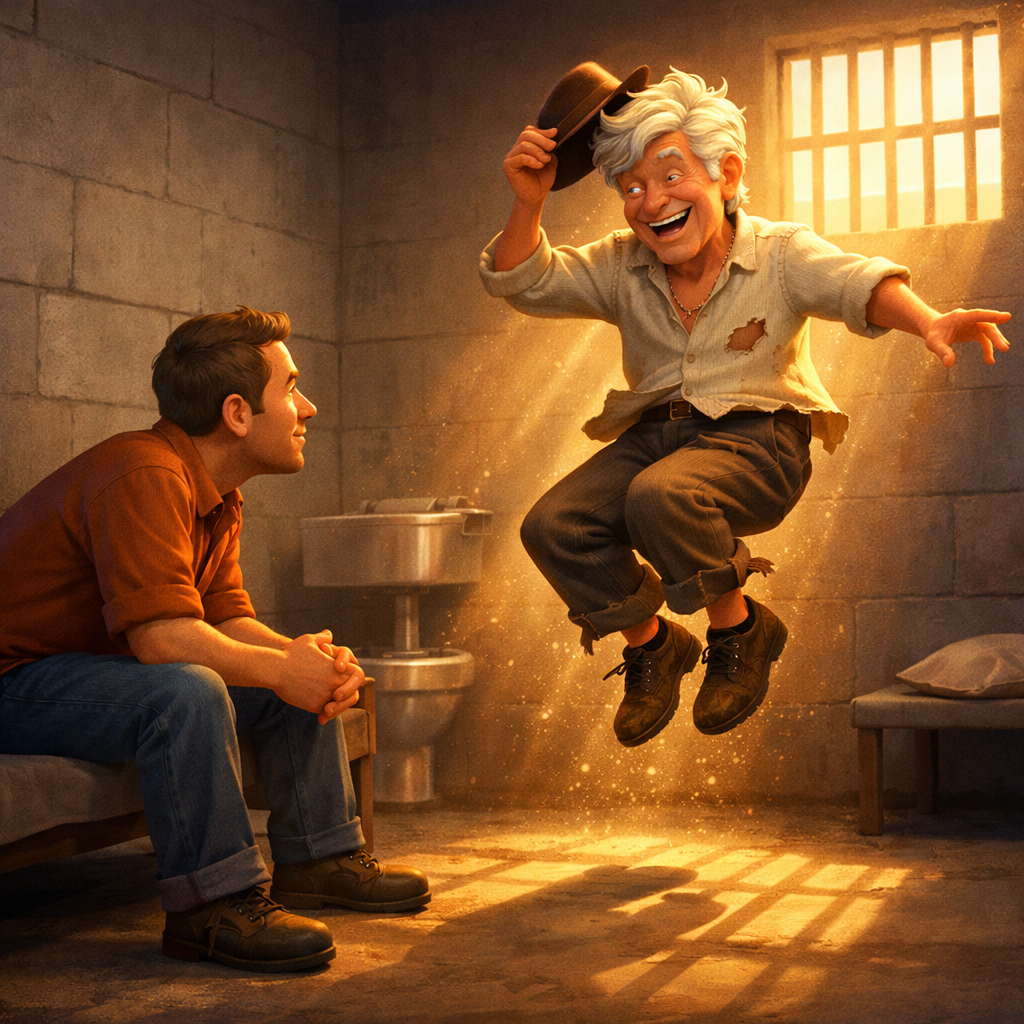
The song itself was born in a jail cell. Songwriter Jerry Jeff Walker once spent a night in a New Orleans jail and met a homeless street performer who called himself “Mr. Bojangles.” To hide his identity from the police, the man borrowed the name. He spoke through tears about his dog who had died years earlier, and then, to lighten the heaviness of the cell, he danced. He jumped high. He touched down lightly. That moment later became a ballad made famous by Nitty Gritty Dirt Band.
It is a story about loss.
It is also a story about what happens when joy disappears.
Most of us know that feeling well. When grief settles in, when loneliness lingers, when worry or anxiety begins to consume us, we do not dance. We shuffle. We mope. We drag our feet. We lose the rhythm of our lives. The step that once felt natural suddenly feels forgotten.

In the song, Mr. Bojangles turns to drinking a bit. It is possible that we might be tempted to turn there too. But more often, without realizing it, we try to manage that emptiness in quieter, more respectable ways. We bury ourselves in work. We stay endlessly busy. We pour ourselves into hobbies, responsibilities, church ministries, or even our children. Many of these things are good and life-giving. But none of them can restore the dance on their own.
Because the dance does not return through motion.
It returns through presence.
There is another dancer in Scripture who understood this deeply. David danced before the Lord when the Ark of the Covenant was brought back home. For years, the Ark, the visible sign of God’s dwelling among His people, had been absent. Something essential was missing. And when David finally brought God home again, he did not walk. He did not stand politely. He leapt. He danced with abandon.
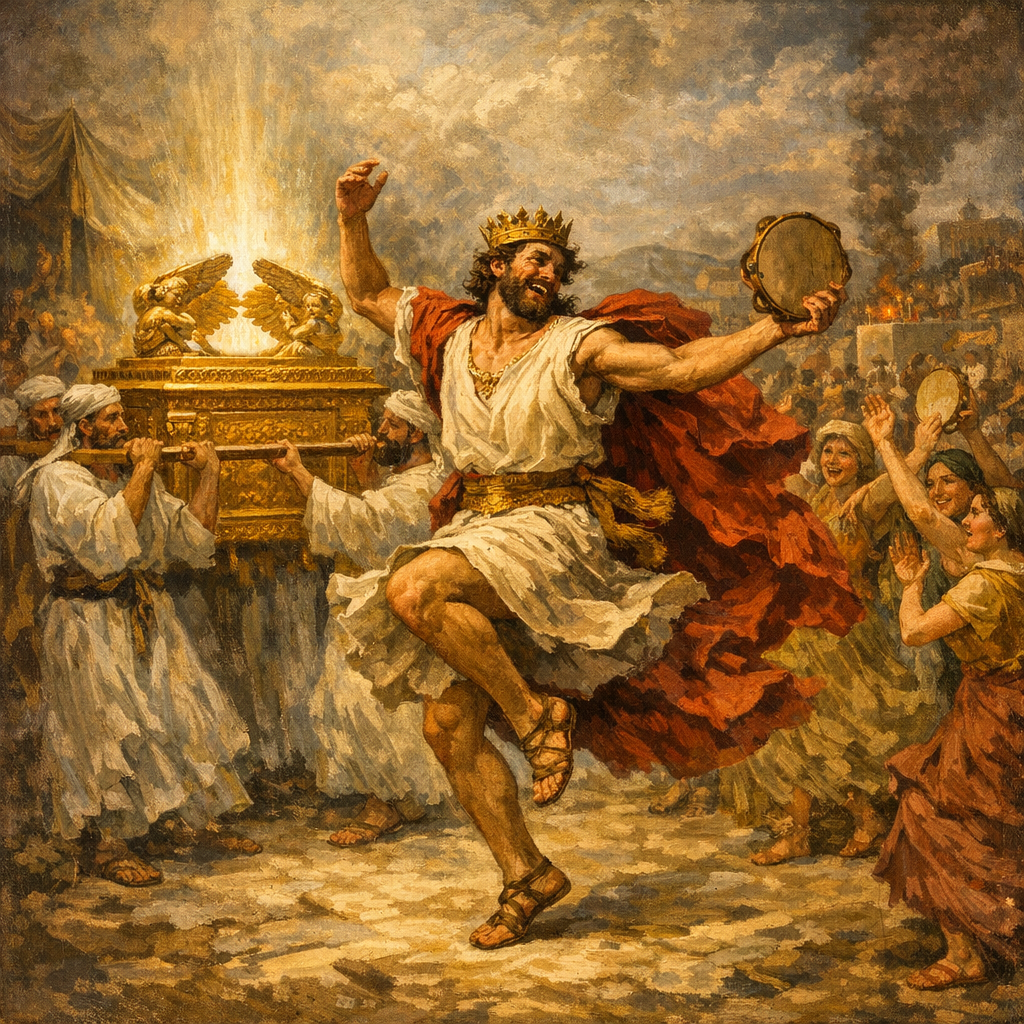
David did not dance to distract himself from pain.
He danced because joy had returned.
That moment tells us something important. We do not dance our way back to God. We dance because God has come near again. And after resurrection, we know just how near He has come. When God is restored to the center, when His presence is welcomed back into the places we have kept busy or guarded, the rhythm returns.
That is why another song quietly completes the story: Lord of the Dance.
“I danced in the morning when the world was young…
I danced on the Sabbath and I cured the lame…
They whipped and they stripped and they hung me high,
Left me there on the cross to die.”
Easter is a great reminder that Christ doesn’t avoid our grief. He steps into it. He enters the jail cells of our fear, sorrow, and confusion. And where His presence is welcomed, movement begins again. Not frantic motion. Not busy distraction. But a gentle, restored dance.

Near the end of Mr. Bojangles, the voice shifts. Another man in the jail cell begins to plead, not loudly, not mockingly, but almost tenderly:
“Mr. Bojangles…
Mr. Bojangles…
Dance.”
It is easy to imagine that moment. No audience. No applause. Just one person asking another to remind him what joy looks like.
Perhaps that invitation still belongs to us.
There are moments when no one is watching, when we are alone in what feels like one of life’s many jail cells. The room is quiet. The heart is heavy. The step feels lost. In those moments, before reaching for distraction or busyness, we might try something different.
We can think of Jesus, the Lord of the Dance, who steps into our sorrow rather than away from it. And with Him in mind, we can remember Mr. Bojangles, jumping high and touching down lightly on a cold jail floor, choosing to move when joy felt far away.
And then, quietly, even awkwardly, we can dance.
Not for show.
Not for escape.
But as a small act of trust.
Christ is risen! The dance has been restored. Let’s dance.

We may be surprised how a few simple steps, taken with Jesus in our hearts, can begin to brighten the day, loosen the walls, and remind us that joy is not gone, it is simply waiting to be led.
Heavenly Father, meet me in the quiet places where no one else sees. When my heart feels confined and my steps feel lost, remind me that Your Son still leads the dance. Give me the courage to move again, trusting that even the smallest step taken with You can restore light to my day. Amen

AMDG
AMDG is a Latin abbreviation for “Ad Majorem Dei Gloriam,” which means “For the Greater Glory of God.”
I always love to hear from you. You can email me by clicking here.
Please take a moment to share your thoughts about today’s message below.

- Love Is the Answer - March 30, 2026
- When the Dance Returns - March 27, 2026
- A Lesson From Lincoln - March 22, 2026

Happy Easter to you and Mary Beth! Thank you for sharing these weekly reflections; it always seems to be exactly what I need to hear in that moment. God Bless you.
Brian, I hope you are having a Blessed Easter! Thanks for a wonderful reminder of how God can bring joy even when we are sad or in pain. The pain does not go away but it becomes somehow more bearable.
Beautifully written and so true. Thank you for putting into words what many of us feel but can’t put into words the way that you’re able to.
Happy Easter, Brian!