
Podcast: Play in new window | Download
Subscribe: Apple Podcasts | RSS
Some Christians look at a bare Cross and see only the wood. Others look at a Crucifix and see the body of Jesus. In both cases, something of the raw reality has been removed. What are we missing? Find out in today’s message.
For Christians, the Cross stands at the center of everything. Yet even here, there is a visible difference between traditions. Some Christians display a simple cross—empty, pointing to the truth that Jesus is risen from the dead. On the other hand, many other Christians, including Catholics, typically display a crucifix—Christ’s body still visible, a reminder of His sacrifice on Calvary. Both perspectives are rooted in truth. But whether we see a bare cross or a crucifix, there is another layer of reality we rarely confront.
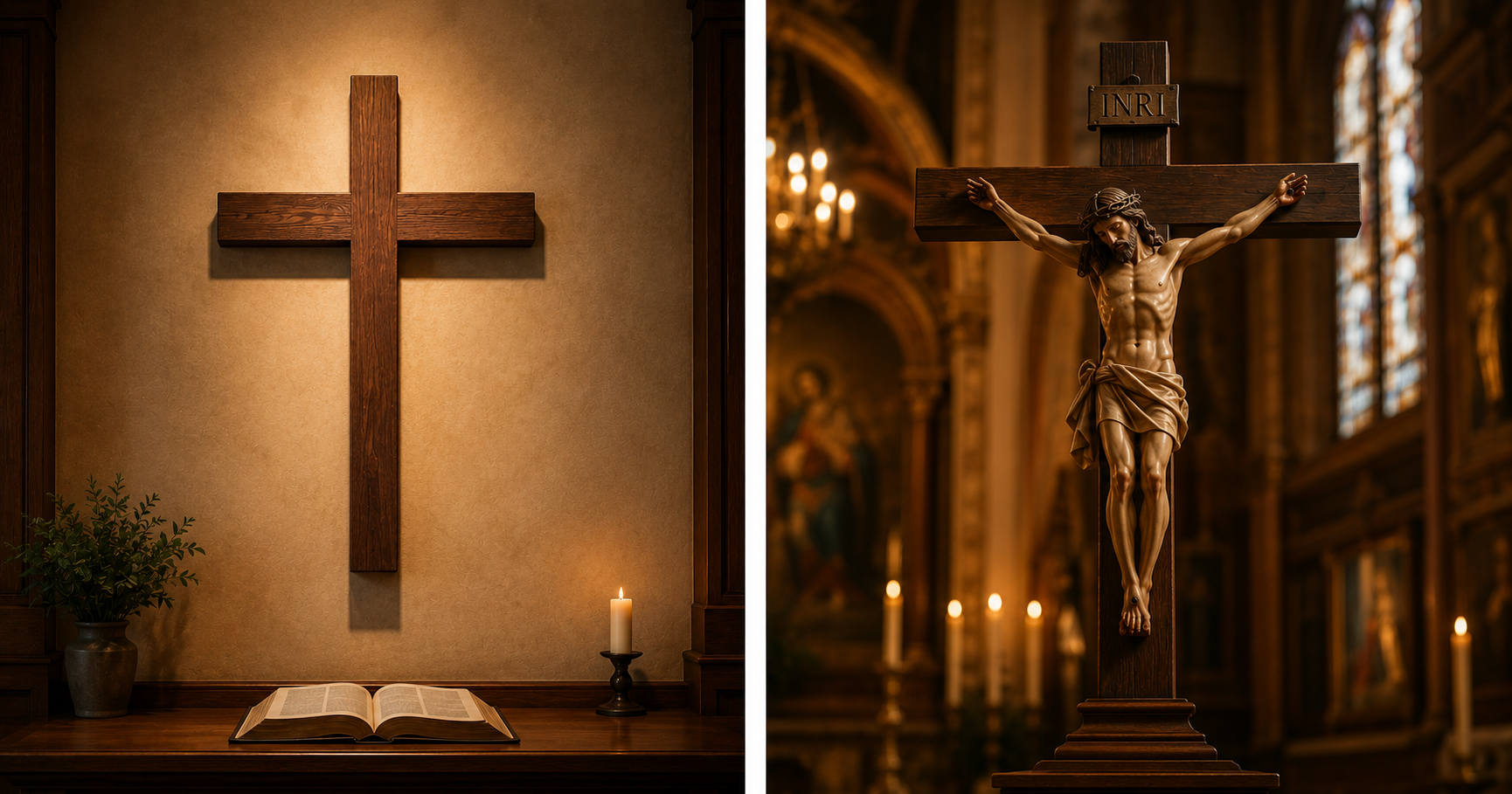
In nearly every depiction, Christ’s body is covered with a modest loincloth. Yet history tells us the Romans stripped their victims completely naked. Crucifixion was not just about pain—it was about shame. Public humiliation was part of the punishment. Exposure, mockery, and ridicule were intentional. Rome wanted its enemies not only destroyed but degraded.
When we look at the cross or the crucifix, we are seeing a softened version of what Jesus actually endured. The reality was harsher. He was left with nothing to hide behind. No dignity. No veil. He bore not just the weight of the nails but the weight of humiliation itself.
Why does this matter for us? Because shame lies at the heart of sin. From Adam and Eve onward, our instinct has always been to cover up. They reached for fig leaves. We reach for excuses, masks, or silence. We hide our guilt. We avoid exposure. The Romans understood this instinct well, which is why crucifixion weaponized shame against the condemned.

And yet Jesus willingly entered into that full exposure. He endured humiliation so that shame could be defeated at its root. He bore our nakedness so that we could be clothed in His mercy.
This brings us to our own response. How do we share in His Cross? Catholics believe this especially happens in the Sacrament of Reconciliation. There, before the priest who represents Christ, they drop their fig leaves and let the truth be seen. It is uncomfortable. It is humbling. But it is a participation in the Cross itself—a share in the nakedness of Christ. Catholics believe that through this sacrament Christ himself, acting through the priest, bestows His healing grace and absolution. Other Christians often choose instead to confess their sins aloud to a trusted friend, mentor, or spiritual guide. In both cases, the pattern is the same: we are called not to hide in silent shame but to bring our sins into the light.
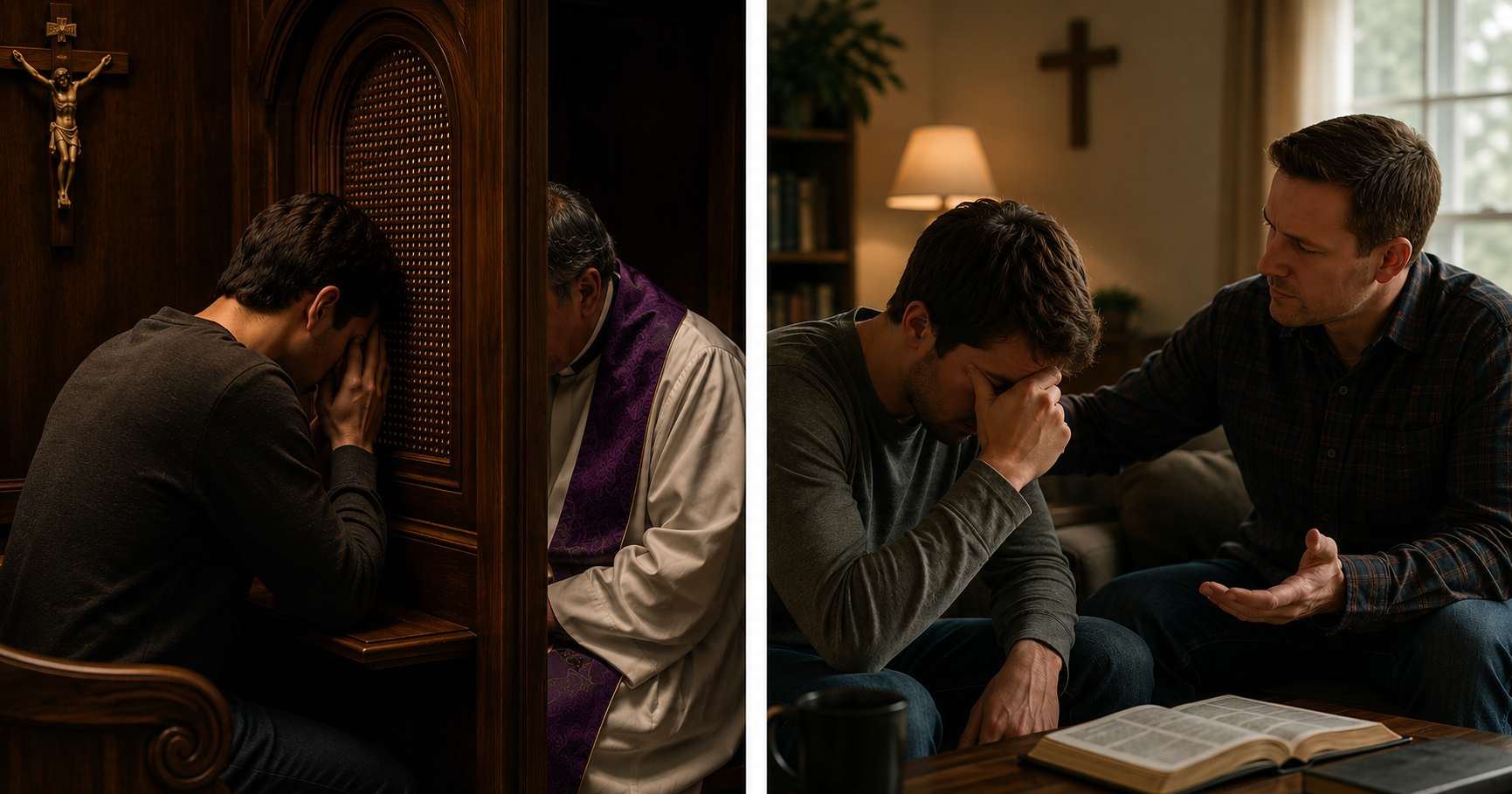
Some say, “I can just confess silently in my mind. God already knows.” And that is true—God does know. But something vital is lost if we stay hidden. Silent confession never asks us to face the humiliation of being known in our weakness. It avoids exposure. It shields us from shame. But the Cross did not shield Jesus. To confess aloud—to a priest, to a brother or sister in Christ—is to embrace the vulnerability that Christ embraced for us. It is to join Him in His nakedness so that we might also share in His victory.
When we choose to confess in this way, shame begins to lose its grip. The enemy wants us to stay in the dark, hidden, fearful of what others might think. But when sin is brought into the light, it loses its power. Confession —whether sacramental or fraternal—becomes our way of climbing onto the Cross with Christ, laying bare our weakness, and discovering the mercy that covers us.
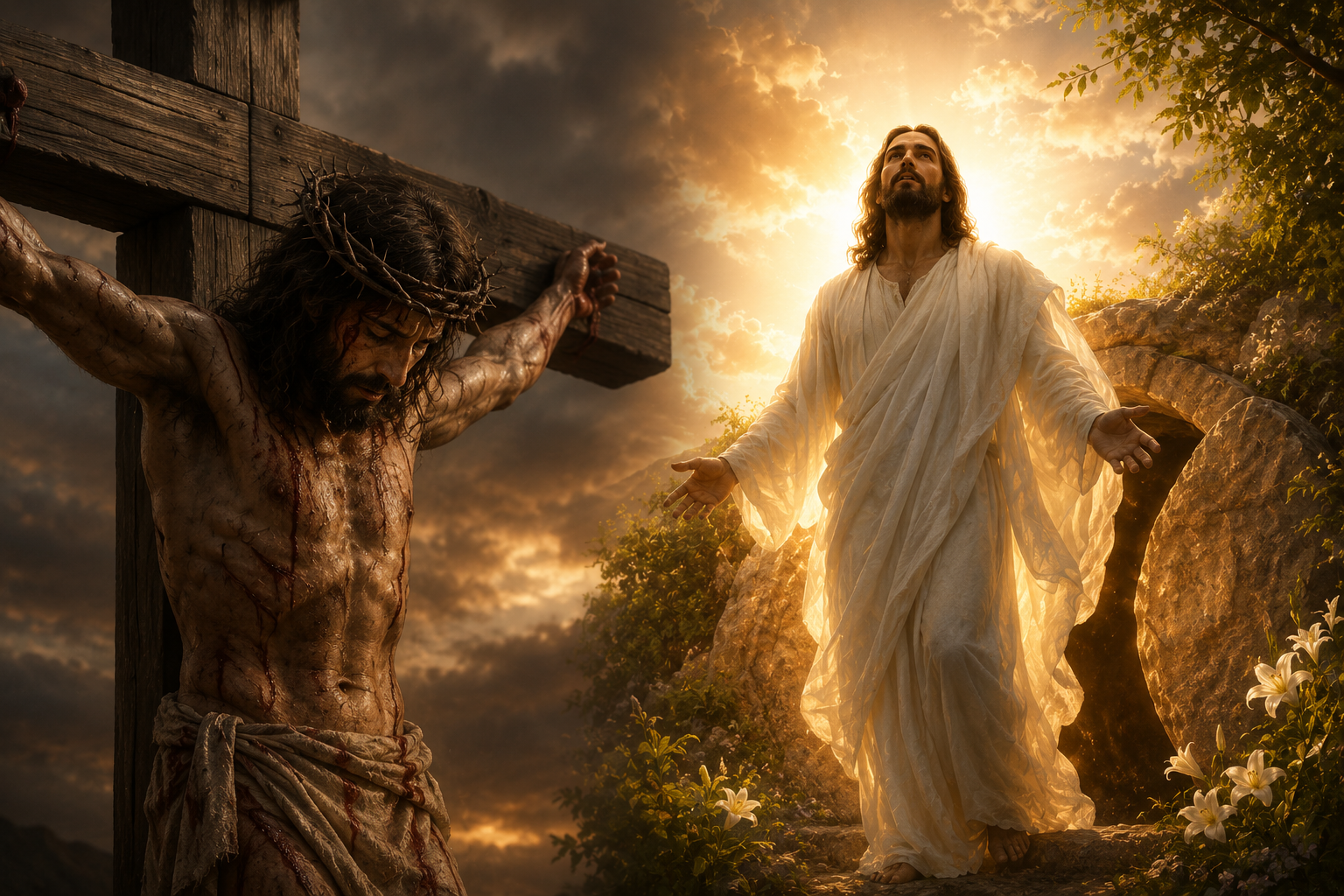
So, the next time we see a cross or a crucifix, let us remember what is not shown. Whether the body is missing or modestly covered, the truth is that Jesus endured full humiliation for our sake. And when we step into confession—not just in the privacy of our thoughts but in the presence of another—we are entering into that same mystery. We are sharing in His exposure. And we are finding, as He promised, that humiliation embraced for love does not end in death. It ends in resurrection.
A Question for Reflection
Are you still trying to keep your sins hidden behind “fig leaves”? Or are you willing, like Christ, to let shame be stripped away so that mercy can clothe you anew?
Have you checked out my new book, Living Out the Lord’s Supper? Find out what readers everywhere are talking about.
AMDG
AMDG is a Latin abbreviation for “Ad Majorem Dei Gloriam,” which means “For the Greater Glory of God.”
I always love to hear from you. You can email me by clicking here.
Please take a moment to share your thoughts about today’s message below.

- The Clouds Remember Me - September 28, 2026
- Lord, Make Me Willing - September 21, 2026
- It Starts With a Look - September 14, 2026

Thank you for message💖🙏
Kathy
You are welcome. I am glad you found it helpful.
Brian
This is such a good insight 👏
Marisa
Thank you for your kind words.
Brian
You know, Brian, I’m sure some people may be put off by this subject. That’s ok. Because each of us has had an instance in our lives when we have felt shame. It’s so important to find a way to release it because it never releases us. Confession is calling.
Jane
Yes, shame is something that all humans deal with at some time or another. But Jesus took our shame to the cross to set us free.
Brian
Hi Brian, WOW, this is the best 4th Day Letter yet. Thanks, and keep up the great work.
Blessing and Peace,
Aron
Thanks for your kind words. I was somewhat worried that some people might be offended or put off by the delicate nature of the message. I am delighted to read your thoughts about it.
Brian