

Podcast: Play in new window | Download
Subscribe: Apple Podcasts | RSS
Have you ever noticed how we almost always seem to have an explanation for why we did what we did? It was our stress. It was our exhaustion. It was our childhood. It was our spouse. It was social media. It was the full moon. And sometimes, as Christians, we even trace every temptation directly back to the devil himself. The funny thing is, most of us do this far more than we realize. In fact, many of us unknowingly live with what I call “Flip Wilson Theology.” To find out what that means, and why Adam and Eve may have started this whole mess, read more.
If you are under the age of fifty, there is a good chance you have no idea who Flip Wilson was. For those of us who grew up in the 1970s, however, he was one of the funniest comedians on television. One of his most famous characters was Geraldine, who always had an excuse for whatever ridiculous thing she had just done. Geraldine would wave her arms dramatically and shout, “The devil made me do it!” America laughed hysterically every time because, deep down, we recognized ourselves in the joke.

The truth is most of us still do exactly the same thing today. We may not blame the devil for buying a dress, but we blame somebody or something for almost everything else. We blame stress. We blame hormones. We blame our spouse. We blame our parents. We blame politics. We blame cable news. We blame social media. We blame exhaustion. Some of us probably blame daylight savings time. Somewhere along the line, humanity became allergic to the words, “Yep, that one’s on me.” Honestly, if excuses burned calories, most of us would look fantastic.
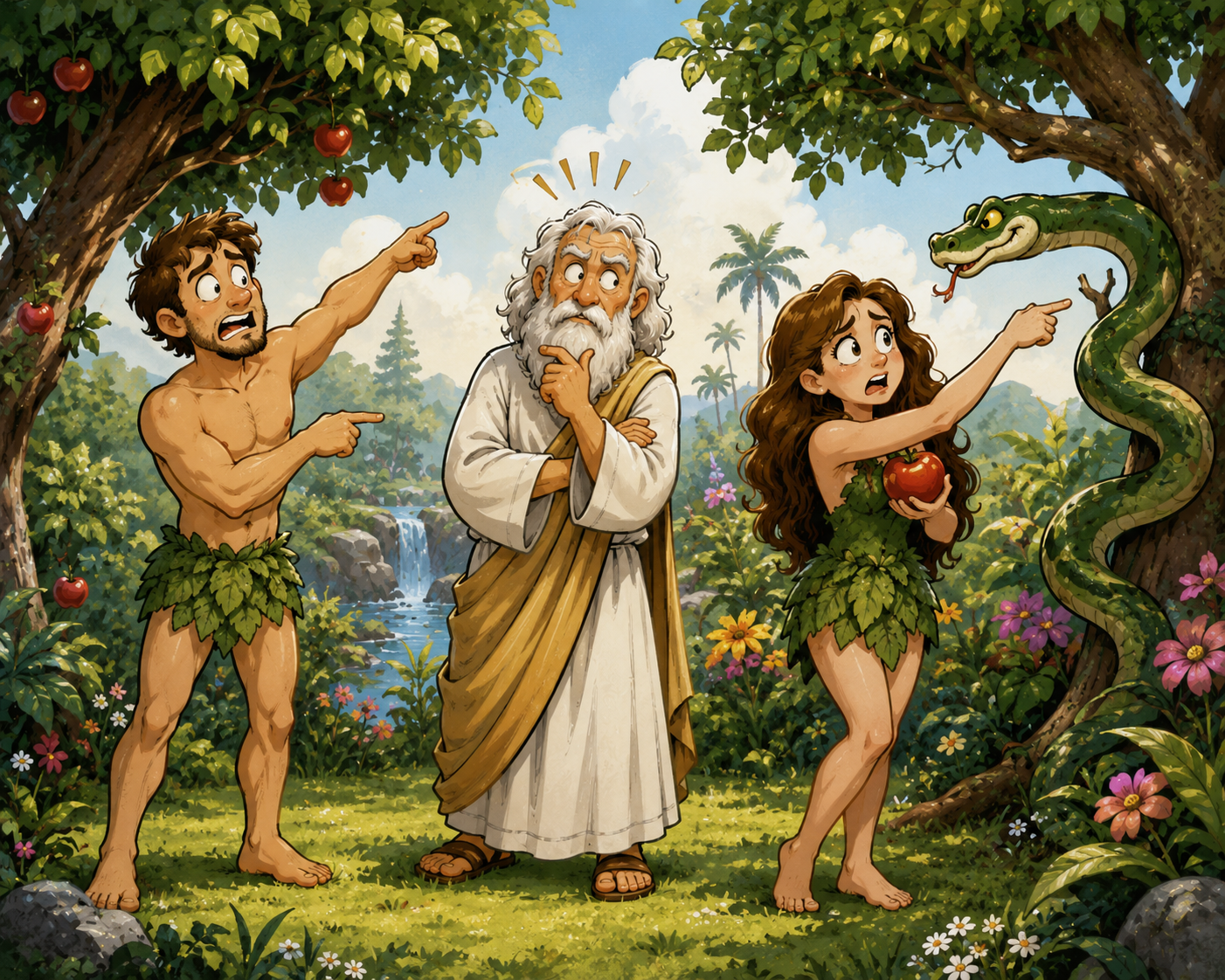
The funny thing is that this problem goes all the way back to the Garden of Eden. Adam and Eve had exactly one rule. One. Not ten commandments. Not 613 Jewish laws. One tree. One restriction. Humanity lasted about fifteen minutes.
When God confronts Adam, Adam immediately starts playing the blame game. Adam says, “The woman whom You put here with me — she gave me fruit from the tree, and so I ate it.” Think carefully about that sentence. Adam was not just blaming Eve. Adam was blaming God. “Lord, if You had not given me this woman, I would still be peacefully eating grapes in Paradise.”
Meanwhile Eve says, “The serpent tricked me.”
And just like that, the first married couple in history became the first married couple in history standing in the kitchen blaming everybody else.
Have you ever noticed how natural this is for all of us? First we deny. Then we blame. Then eventually we confess and promise we will never do it again, right before doing it again three days later. Humanity has changed a lot over the centuries, but apparently not that part.
Now before we get too carried away, we all know temptation is real. Most of us have experienced it about seventeen times before breakfast. Christianity has always taught that temptation comes from three places. First, there is our own concupiscence, which is a fancy theological word meaning our human tendency toward selfishness and disordered desires. Second, there is the fallen world around us, constantly pulling us toward greed, lust, anger, pride, distraction, and self-centeredness. Third, there are genuine spiritual temptations. Evil is real. Satan is real. Spiritual warfare is real.
But Satan only makes up one-third of the problem.
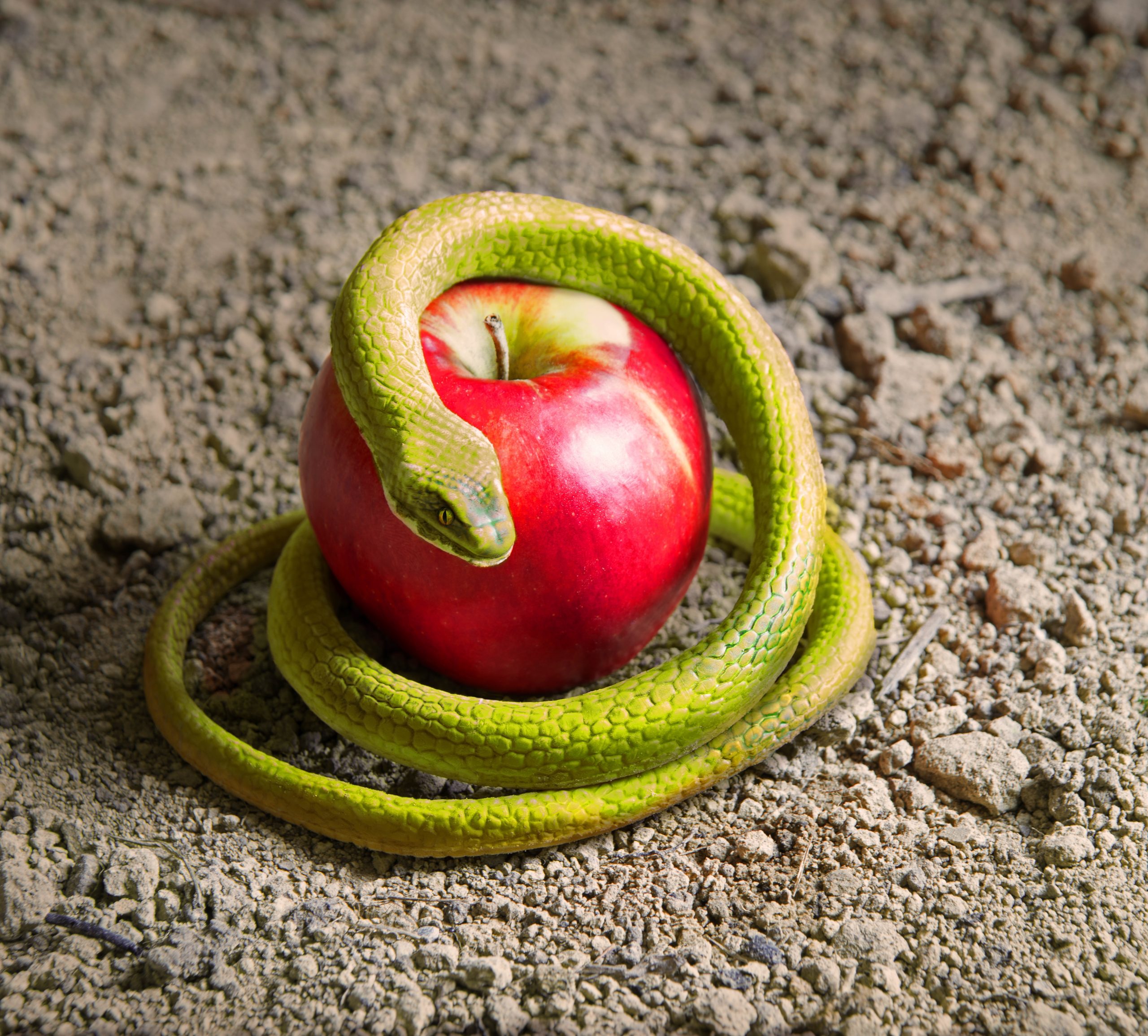
Sometimes the devil tempts us. Sometimes the world pressures us. And sometimes we simply wander unsupervised into the kitchen at 11:30 at night and eat half a cheesecake because we are human beings encased in flesh. Not every bad decision requires direct demonic intervention.
Perhaps we have all made this mistake at one time or another as Christians. We quietly assume holiness means someday we will simply stop struggling. We imagine spiritually mature people floating through life without temptation, without weakness, and without battles. Then we experience our own struggles and think something must be terribly wrong with us.
But Christianity has never taught that. The goal is not becoming people who are never tempted. The goal is becoming people who stop hiding, stop blaming, and keep turning back toward God honestly. At some point we stop saying, “The devil made me do it,” and instead say, “Lord, I need Your help. I need Your grace. I need Your mercy. And I need to stop pretending that blaming everybody else is a spiritual gift.”
Oddly enough, freedom begins there. Not in perfection. Not in pretending temptation no longer exists. Not in acting like Satan is responsible for every foolish thing we do. Freedom begins when we stop hiding behind excuses and finally allow God to work with the truth.
And honestly, if Geraldine were still around today, she would probably still be blaming the devil for everything. Deep down, however, most of us already know the truth. Sometimes the devil tempts us. Sometimes the world influences us. Sometimes our own flesh betrays us. But every single day, God continues to invite all of us back to honesty, back to grace, and back to Him.
Heavenly Father, help me to stop hiding behind excuses and blaming others for the things I choose to do. Give me the humility to honestly face my weaknesses, the wisdom to recognize temptation, and the courage to keep turning back toward You whenever I fall. Teach me to rely not on denial or shame, but on Your mercy and grace. Help me become more honest, more compassionate, and more fully alive in You. Amen.
Have you checked out my new book, Living Out the Lord’s Supper?

Find out more about what readers are talking about, click here.
AMDG
AMDG is a Latin abbreviation for “Ad Majorem Dei Gloriam,” which means “For the Greater Glory of God.”
I always love to hear from you. You can email me by clicking here.
Please take a moment to share your thoughts about today’s message below.

- The Clouds Remember Me - September 28, 2026
- Lord, Make Me Willing - September 21, 2026
- It Starts With a Look - September 14, 2026

That was a great message Brian, that I needed to hear today. Thank you! +Thank you, for the chuckles from Flip & Geraldine! I’m enjoying reading your new book. -John M
That was a great message Brian, that I needed to hear today. Thank you! +Thank you, for the chuckles from Flip & Geraldine! I’m enjoying reading your new book. -John M
Brian, a word of thanks for your thoughtful, insightful, WONDERFUL BOOK. I finished it in a couple of sittings and intend to read it again. I can’t wait to share it with my Cursillo reunion sisters and encourage them to read it as well .
God bless you for the beautiful work you do and for being a spiritual gift to so many!