

Podcast: Play in new window | Download
Subscribe: Apple Podcasts | RSS
What would change if you knew the exact date your life on earth would end? Would your priorities be different? Would your relationships matter more? Would your faith deepen? Today’s message explores the surprising spiritual lesson hidden within a concept called “planned obsolescence.” I invite you to read more.

From appliances to cars, everything seems built to break sooner these days. But what happens when we recognize that our own earthly lives come with an unseen expiration date as well? Reflecting on that truth might just reshape our priorities.
Manufacturers used to pride themselves on building things that lasted. We can think back fifty or sixty years and remember refrigerators that ran for decades, cars that could be repaired endlessly, and household tools that seemed almost indestructible. But over time, companies discovered that if a product wore out sooner, consumers would come back to buy it again. Planned obsolescence became a design strategy, not an accident. Our appliances, gadgets, and even our cars now seem to have invisible countdown timers. Sooner or later, they break, and we find ourselves back at the store.
As much as we dislike it, we have learned to accept it. But the idea raises an interesting spiritual question: if manufacturers build products with planned obsolescence, did our Creator do the same? In a way, yes. Our own earthly lives come with an unseen expiration date as well. We are not made to live forever on this earth. We age. We slow down. Our bodies wear out. No matter how hard we try to stretch our longevity, we eventually reach the end of our earthly warranty.
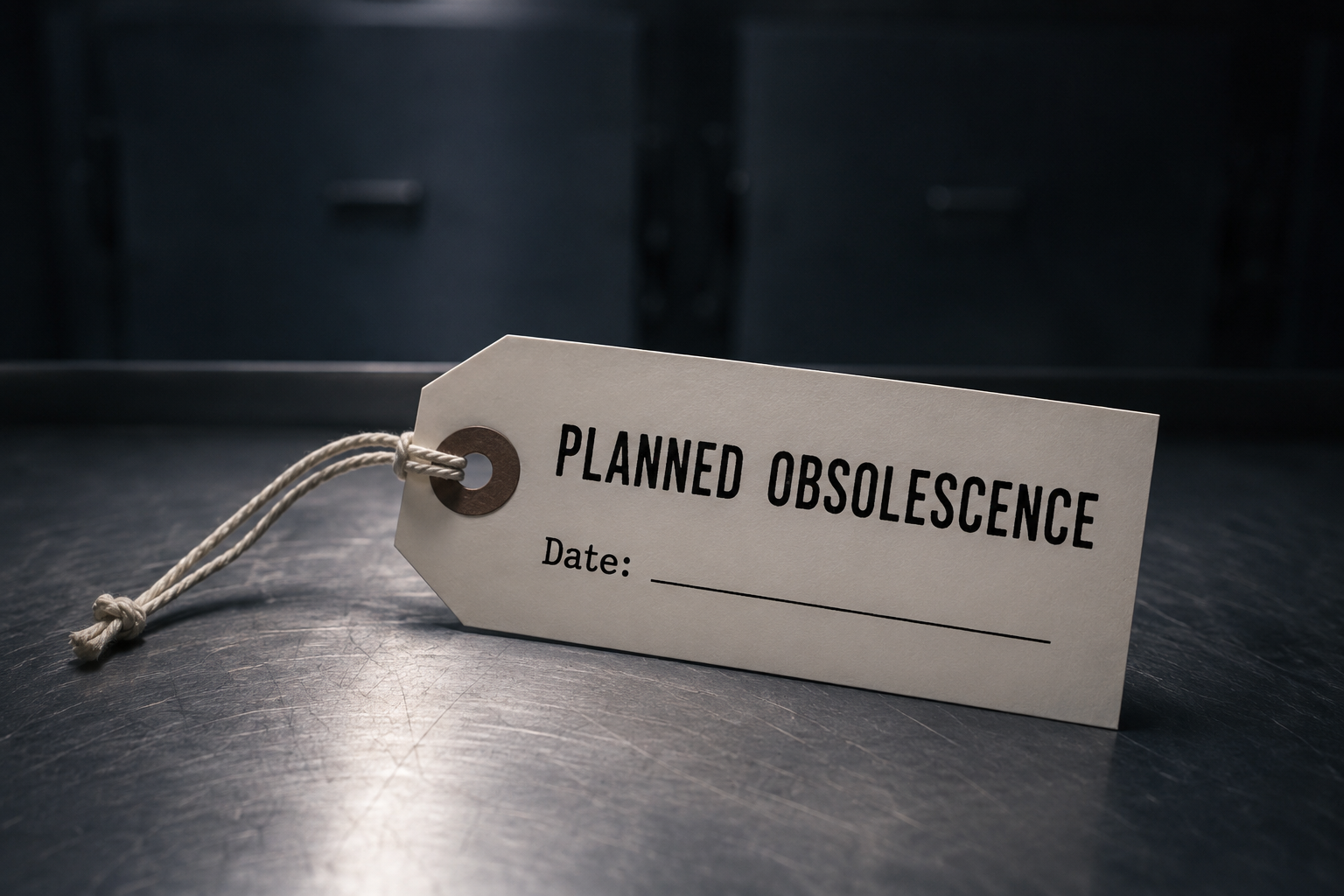
The difference is this: human manufacturers design their products to fail so they can profit. God designed our earthly bodies to be temporary so that we could receive something far better. Our “planned obsolescence” is not a business strategy, but a spiritual mercy. We were never meant to cling permanently to this world. We were made for eternity.
The psalmist understood this reality long ago. Psalm 90 reminds us that while God is eternal, our lives are brief. “The days of our life are seventy years, or perhaps eighty, if we are strong… they are soon gone, and we fly away.” Yet the psalm does not leave us discouraged. It points us back to God’s steadfast love and reminds us that every day is a gift to be lived with purpose and gratitude.
Still, we don’t know the date or the hour when our earthly time will run out. God knows exactly when our expiration date will arrive. We do not.
And because we do not know, it changes everything.

If we had a printed label on our souls that said “Expires: April 9, 2036,” how would we live today? How would we prioritize our time, our relationships, our service, and our spiritual preparation? Would we speak more gently? Would we let go of grudges faster? Would we invest less energy in accumulating possessions that will someday be left behind? Would we pray more deeply or seek reconciliation more quickly? And perhaps most importantly, would we live every day with a sense of gratitude for the time we still have?
We might also treat our physical bodies differently. Every machine requires maintenance, and so do we. We might sleep better, eat better, or take better care of our health if we knew how many days were left on the clock. But even more than physical maintenance, we might give more attention to the spiritual maintenance that keeps our souls tuned to God.
There is a kind of holy urgency that comes from not knowing how long we have. Not fear. Not panic. Just a gentle reminder that each day is precious. We are all guilty of assuming we have more time than we really do. We tell ourselves we will deepen our prayer life “one day,” rebuild a broken relationship “later,” or turn away from a destructive habit “when things settle down.” But one thing about planned obsolescence is certain: the countdown keeps moving whether we pay attention to it or not.
Scripture tells us that our lives are like a mist that appears for a little while and then disappears. We know this, yet we often live as if our time on earth is endless. The truth is that every breath we take is a gift. Every sunrise is another day to become a little more like Christ. And every interaction is an opportunity to love someone God places in our path.
We all only have a short time here, and then a long time gone. I found a song on Facebook that says this so well. Take a minute to listen to it. CLICK HERE
There is freedom in accepting that this world is temporary. When we let go of the illusion of permanence, we begin to see life differently. Our worries lose some of their power. Our possessions lose some of their hold on us. Our schedules become less frantic. And our hearts become more open to the things that matter most.

So maybe planned obsolescence is not something to fear. Maybe it is a quiet invitation. An invitation to live more intentionally. To forgive more readily. To savor the people we love. To mend what is broken. To use our gifts generously. To walk with Christ today, not someday.
If we knew our expiration date, we would almost certainly live differently. But we don’t need to know the date in order to embrace the invitation. The fact that our time is finite is reason enough. The clock is ticking, but not in a threatening way. It is simply reminding us to live well, to love well, and to use every remaining day to prepare our hearts for the life that will never wear out, never break down, and never end.
Heavenly Father, thank You for the gift of today. Help me never to assume that tomorrow is guaranteed. Teach me to use the time You have given me wisely, loving others generously, forgiving quickly, and walking faithfully with You. When I become distracted by the temporary things of this world, remind me that my true home is with You. Satisfy me each morning with Your steadfast love, and help me rejoice and be glad all my days. May I live with gratitude, serve with purpose, and prepare my heart for the eternal life You have promised. Amen.
Have you checked out my new book, Living Out the Lord’s Supper?

Find out more about what readers are talking about, click here.
AMDG
AMDG is a Latin abbreviation for “Ad Majorem Dei Gloriam,” which means “For the Greater Glory of God.”
I always love to hear from you. You can email me by clicking here.
Please take a moment to share your thoughts about today’s message below.

- Yesterday’s Crooked Rows - October 23, 2026
- Have We Sanitized Death? - October 12, 2026
- Willing Enslavement - October 5, 2026

Ok Brian, today’s message will remain at the top of my most important list. Thank you. I needed this.
Beautiful message today, Brian. We will be burying a friend later this morning and this onecreally hits home. I loved the song choice as well. Fits your message perfectly.
Always excellent and inspiring Brian! I needed to hear that today-feel very discouraged and hopeless and the song was wonderful! Thank you❤️
Brian,
What zn insightful reminder that we need to live each day as our last. To tell our loved ones how much they mean to us and enrich our lives. We may never get another chance. Thank you for your thoughtful letters that continuously help us live our lives fully and prepare us for eternity. May God reward you and your family abundantly.