

Podcast: Play in new window | Download
Subscribe: Apple Podcasts | RSS
Our calendars are filled with appointments, responsibilities, and commitments. We make time for the things we consider important, yet there is one appointment we sometimes overlook. An ancient Christian tradition might help us reconsider our priorities. I invite you to read more.
When was the last time you made an appointment with God? We schedule doctor visits, meetings, haircuts, and countless other activities. Yet how often do we reserve a specific time each day for an encounter with the Lord?
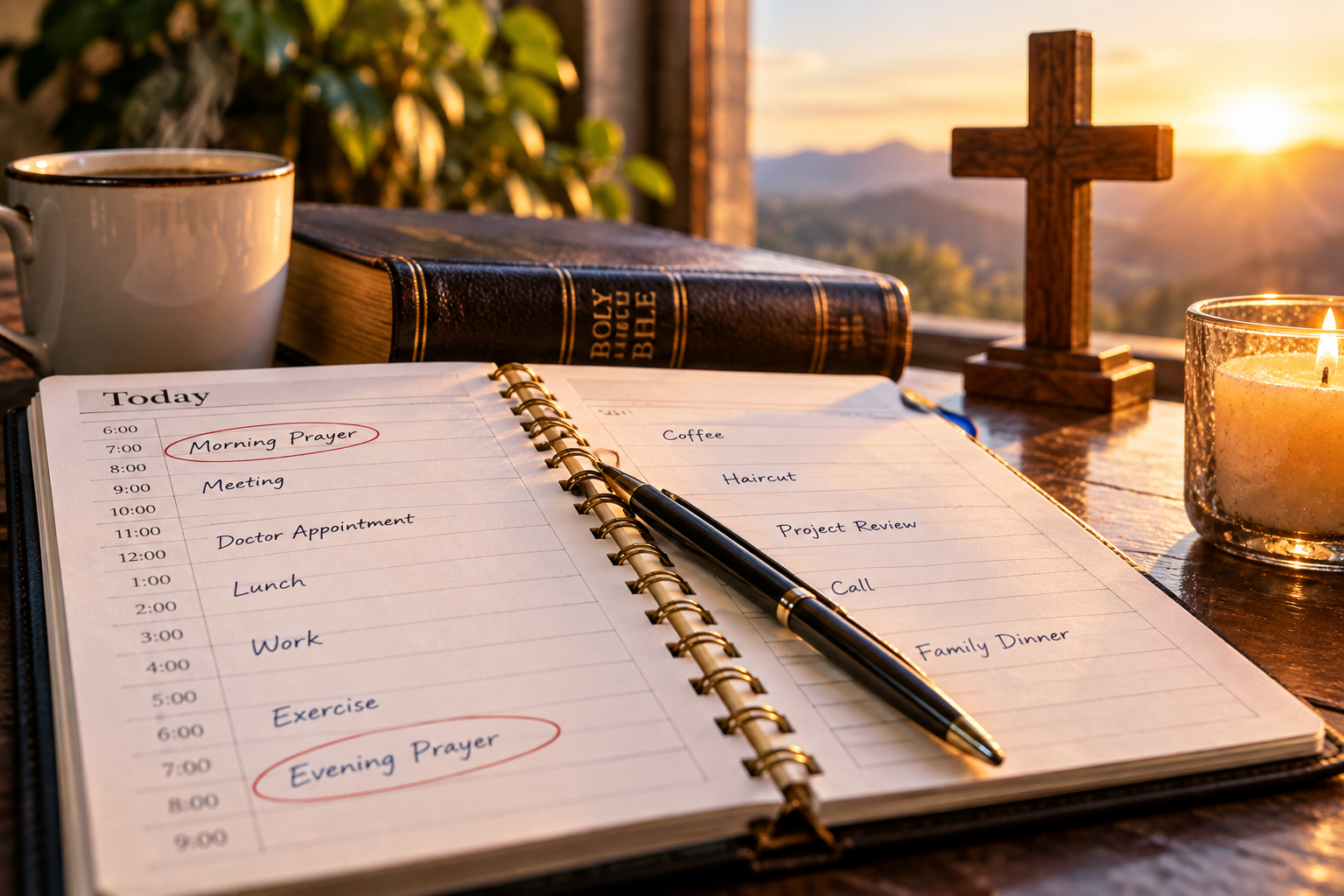
Most Christians recognize the importance of prayer. We pray before meals, seek God’s help in difficult times, and thank Him for our blessings. But prayer can become something we squeeze into our schedules rather than something around which we organize our lives. Setting aside particular times for prayer, however, is an ancient practice rooted in our shared spiritual heritage.
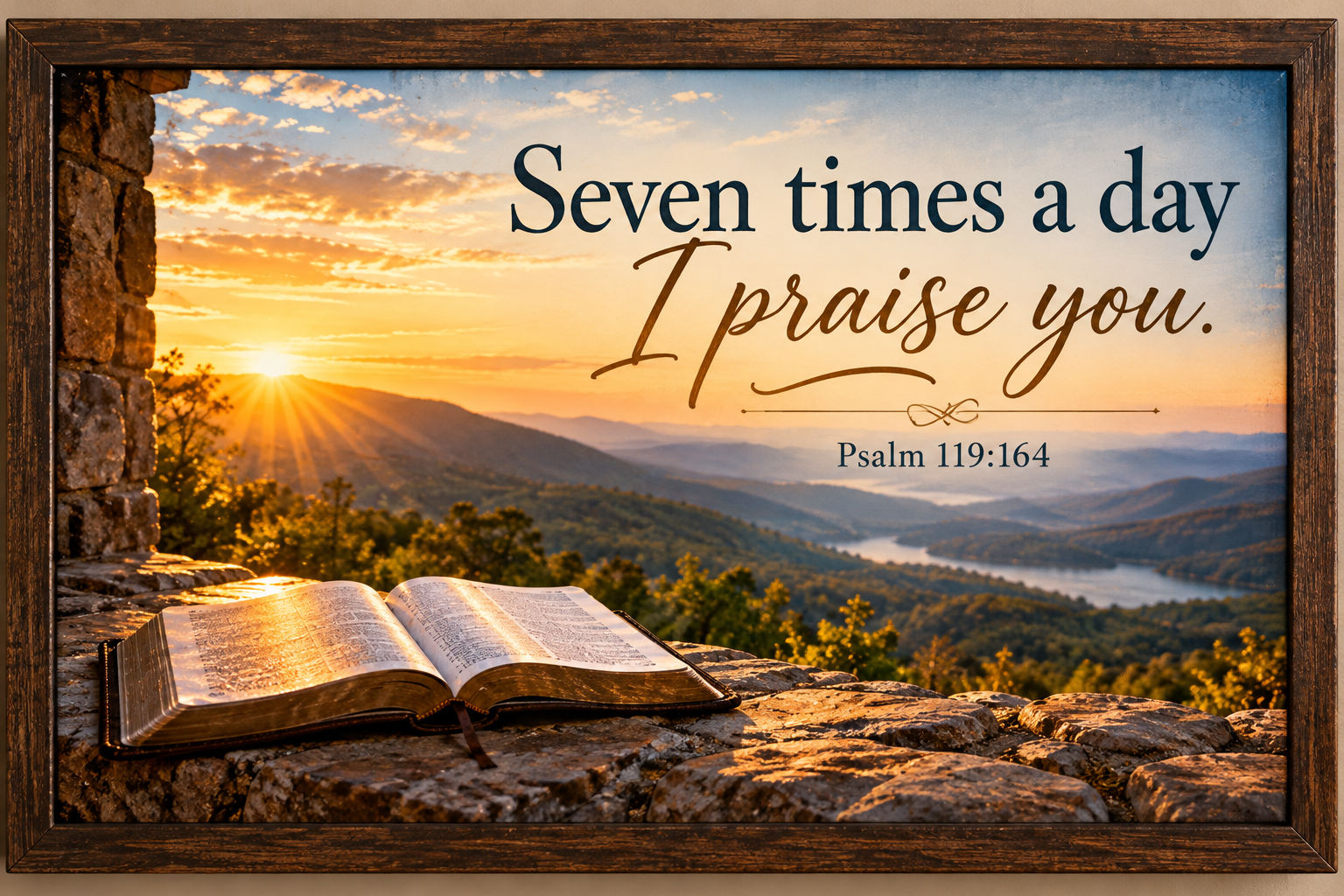
Long before Christ’s birth, the Jewish people prayed at regular hours. The psalmist proclaimed, “Seven times a day I praise you” (Psalm 119:164). Daniel prayed three times daily, even when doing so endangered his life (Daniel 6:11). Peter and John went to the Temple at the appointed hour of prayer (Acts 3:1). For God’s people, prayer was not merely a response to emergencies. It was a rhythm of life.
The earliest Christians continued this tradition, gathering to pray the Psalms, hear Scripture, and praise God. Over the centuries, these practices became more structured. Monastic communities, particularly through the influence of St. Benedict, helped preserve regular hours of prayer.
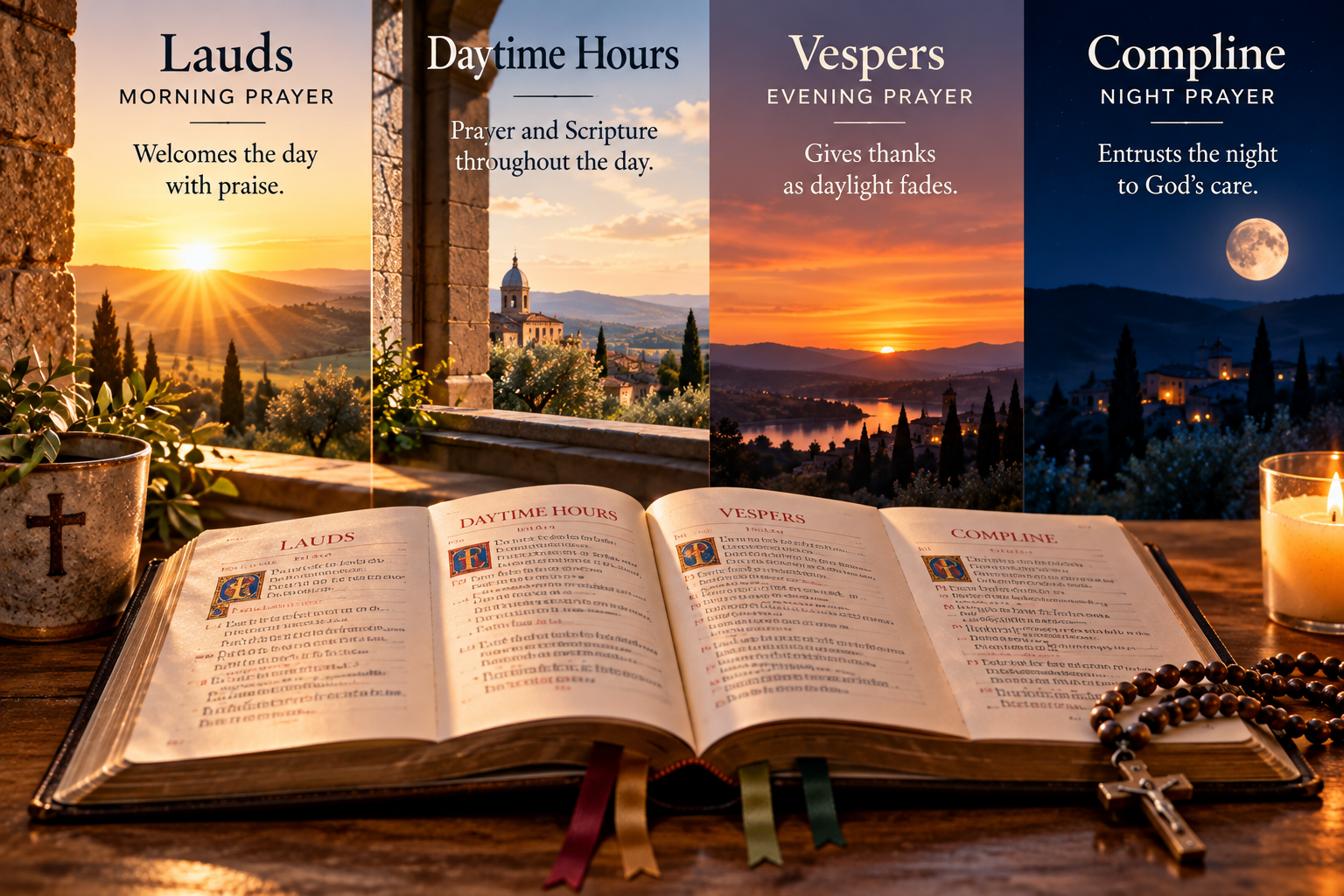
Within the Catholic Church, this tradition developed into the Divine Office, now commonly called the Liturgy of the Hours. Its purpose is beautifully simple: to sanctify the day through prayer. Morning Prayer, or Lauds, welcomes the day with praise. Evening Prayer, or Vespers, gives thanks as daylight fades. Night Prayer, or Compline, entrusts the night to God’s care. Other hours offer prayer and Scripture throughout the day. The Psalms are central, giving voice to joy, sorrow, fear, repentance, and hope.
Priests and many religious have particular obligations to pray the Hours, but Catholic laypeople are encouraged to participate too. Anglican, Orthodox, Lutheran, and other Christian communities also maintain forms of prayer at appointed times. The forms differ, but the desire to make room for God is shared.
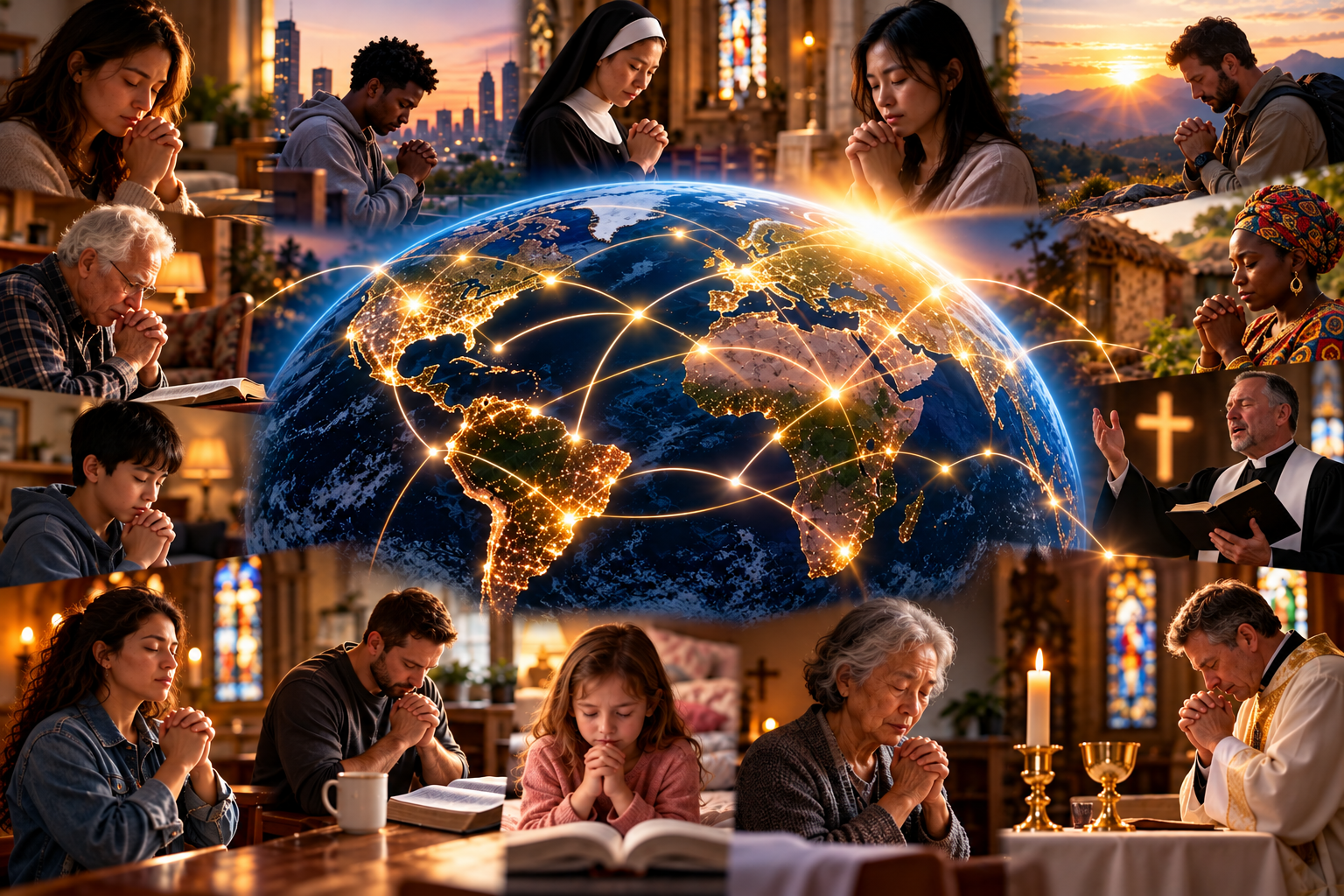
Perhaps one of the most beautiful aspects of scheduled prayer is that we are never truly praying alone. When we pause to pray at regular times throughout the day, whether morning, noon, or night, our individual voices join the collective voices of Christians around the world who are also lifting their hearts to God. I’ve even seen websites devoted to the Divine Office that display a globe illuminated by lights representing people praying in different locations. Picture that for a moment. Imagine a globe with lights shining across continents, each one representing someone lifting their heart to God. Some are praying in monasteries or churches, while others are sitting quietly in their homes. They may be separated by thousands of miles, speak different languages, and belong to different Christian denominations, yet they are united in prayer to the same loving God. As the Earth turns and the hours pass, this beautiful rhythm of prayer continues around the world. What a powerful reminder that even when we pray alone, we are part of something much greater than ourselves—the worldwide Body of Christ.
I invite you to listen to this song I wrote.
I’m not suggesting that every Christian adopt the formal Liturgy of the Hours. But I do believe its history offers all of us a valuable lesson: prayer deserves a regular place in our day.
We find time for morning coffee, the news, exercise, television, and our phones. What might change if we gave prayer the same priority? Imagine starting the morning with five minutes of Scripture, pausing at noon to acknowledge God’s presence, and ending the evening with gratitude, forgiveness, and trust.
St. Paul tells us to “Pray without ceasing” (1 Thessalonians 5:17). That doesn’t mean abandoning our responsibilities to recite prayers all day. It means living with our hearts turned toward God. Scheduled moments of prayer can help that awareness grow between those moments too.
We don’t schedule prayer because God is only available at certain hours. We schedule prayer because, without intentionality, we can become unavailable to Him.
This week, make an appointment with God. Better yet, make three: morning, midday, and evening. Begin with just a few minutes. Read a Psalm, offer thanksgiving, or sit quietly in His presence. This isn’t about adding another obligation. It’s about deepening our friendship with Jesus Christ.
The God who created time has already made Himself available to us. Perhaps it’s time we made ourselves available to Him.
Heavenly Father, forgive us for the times we allow the busyness of life to crowd You out. Help us make time each day to draw closer to You in prayer. May our voices join with Christians around the world in offering You praise and thanksgiving. Teach us to seek You not only at appointed times, but in every moment of our lives. Amen.

AMDG
AMDG is a Latin abbreviation for “Ad Majorem Dei Gloriam,” which means “For the Greater Glory of God.”
I always love to hear from you. You can email me by clicking here.
Please take a moment to share your thoughts about today’s message below.

- I Had No Control Over That - November 16, 2026
- Still Wanting More - November 9, 2026
- An Appointment with God - November 2, 2026

Simply beautiful song Brian.‼️🙏🙏
Brian, the Lord has asked us to remember His passion at the 3 o’clock hour.
With today’s watches it is pretty easy to set a reminder for 3 pm. He doesn’t ask us to stop what we are doing but stop to remember His sacrifice.
This will not surprise you, Brian, but a few weeks ago a friend I have never met has a little prayer she repeats 3 times before going to bed. It’s all about God taking care of and solving every problem for our good. It works. The song you wrote for today’s Letter is exactly what I needed to hear. God Bless You, Brian.
What a song, thanks Brian, you never cease to amaze me with your insight into God and our relation with him.
God Bless
Beautiful brian! As always!
You gave a wonderful talk at st Anastasia in teaneck many moons ago!
The song u wrote is terrific!
Keep up the good work and I will be passing this on to others!
Brian,
Thanks for this timely reminder to set time aside each day for prayer. I’ve been using the Liturgy of the Hours for many years and go through times of dryness where I fail to open the books. Other times I am faithful to the discipline of the hours and always appreciate the grace I receive. You have encouraged me to continue to be faithful and committed to praying the hours and I am so grateful for your witness. Today is my 75th birthday and I consider this a wonderful gift from my dear friend. Thank you.