

Podcast: Play in new window | Download
Subscribe: Apple Podcasts | RSS
Have you ever finally gotten something you really wanted, only to discover that it wasn’t long before you wanted something else? We spend much of life reaching for the next accomplishment, the next purchase, the next experience, or the next pleasure. We tell ourselves that this next thing will finally satisfy us. But somehow, even after we get it, we are still wanting more. Why? I invite you to read more.
I was recently reading the opening chapter of Ecclesiastes when one particular verse stopped me. The writer says, “The eye is not satisfied with seeing, or the ear filled with hearing” (Ecclesiastes 1:8). Thousands of years have passed since those words were written, yet they could easily have been written about us.
There always seems to be something else to see, something else to experience, something else to acquire. We upgrade the house, the car, the phone, and the television. We travel to places we have dreamed about visiting, only to begin thinking about where we might go next. We achieve one goal and almost immediately establish another. Even our entertainment never ends. There is always another program to watch, another song to hear, another website to visit, another screen to scroll.

None of these things are necessarily bad. The problem begins when we expect temporary things to provide permanent fulfillment.
Ecclesiastes opens with words that can initially sound rather depressing: “Vanity of vanities! All is vanity.” The writer looks at the world around him and sees an endless cycle. The sun rises and sets. The wind blows around and around. Streams continually flow into the sea, yet the sea is never full. Generations come and generations go. People work, struggle, accumulate, accomplish, and eventually disappear.
The Hebrew word translated as “vanity” is hevel. It can mean breath, vapor, or mist. Think about seeing your breath on a cold morning. For an instant it is clearly visible, and then it disappears. Ecclesiastes is reminding us that so much of what consumes our attention is exactly like that. We desperately try to grasp things that were never meant to be held forever.

Perhaps this explains why we are so restless. And perhaps the Psalms give us the answer to that restlessness in one beautiful prayer: “Satisfy us in the morning with your steadfast love, so that we may rejoice and be glad all our days” (Psalm 90:14). Notice what the psalmist asks God to satisfy us with. Not possessions. Not accomplishments. Not another experience. His love.
More than sixteen centuries ago, St. Augustine understood this same truth. In his Confessions, he wrote one of Christianity’s most enduring observations: “Our heart is restless until it rests in you.” Augustine knew this from experience. Before surrendering himself to God, he searched for fulfillment in ambition, intellectual achievement, relationships, pleasure, and worldly success. Yet none of them could quiet the longing within him.
Ecclesiastes identifies the restlessness. The Psalm points us toward what satisfies it. Augustine tells us why.
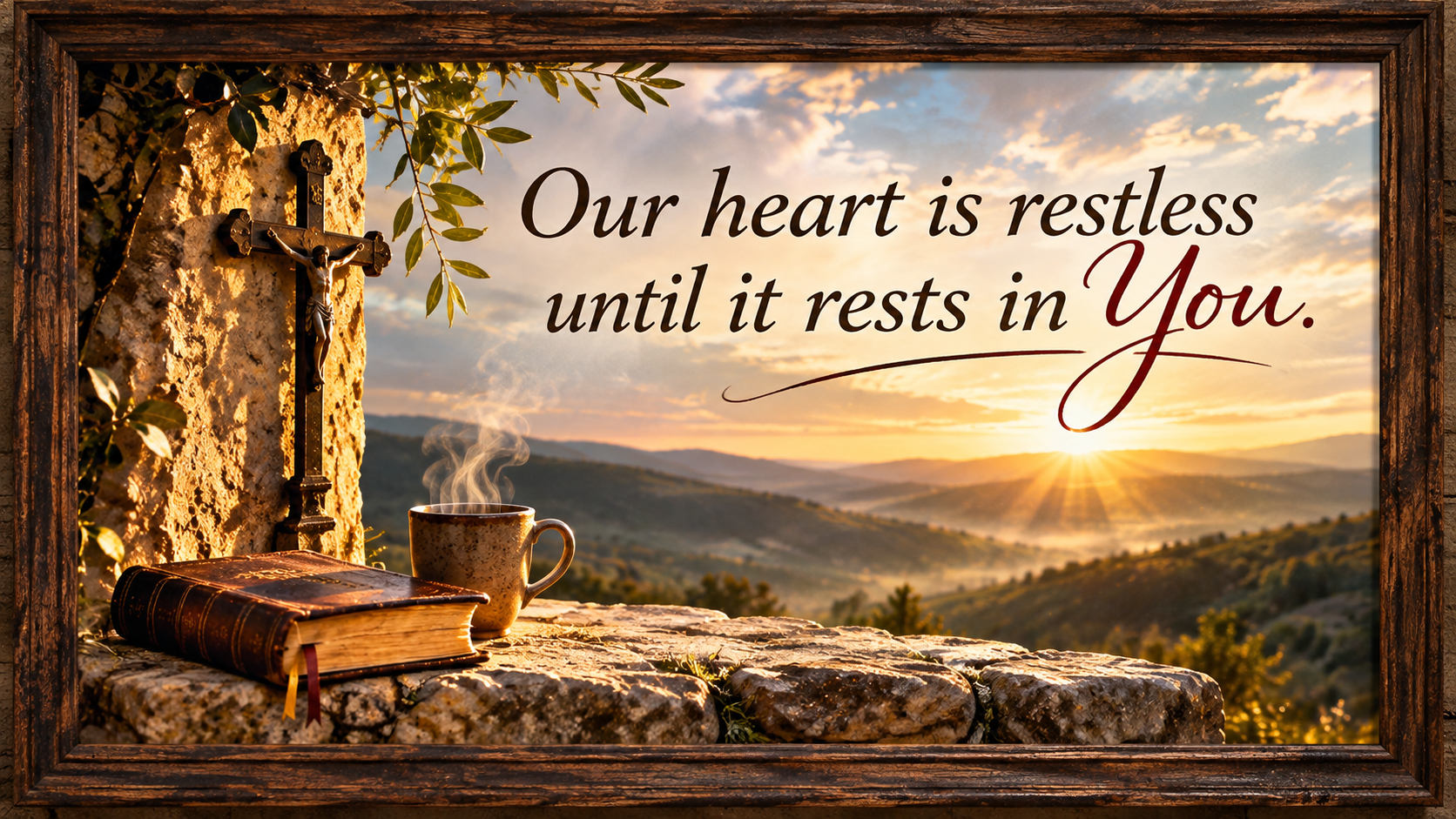
We were created by God and for God. Therefore, nothing less than God can completely satisfy the deepest longing of the human heart. We can try to fill that space with possessions, accomplishments, recognition, pleasure, relationships, travel, entertainment, or countless other things. Some may bring genuine happiness. Some are wonderful gifts from God. But none of them are God.
Perhaps that is why we can have so much and still feel as though something is missing.
Jesus never told us that the things of this world have no value. Creation is good. Friendship is good. Marriage and family are gifts. Work can have tremendous meaning. Beauty, music, laughter, good food, and celebrations enrich our lives. The mistake is not enjoying these gifts. The mistake is confusing the gifts with the Giver.
Eventually every earthly experience ends. The vacation finishes. The new car gets old. The applause fades. Children grow up. Careers end. Bodies age. Possessions pass to someone else. Psalm 90 reminds us that our lives are like grass that flourishes in the morning and fades in the evening. That is why the psalmist prays, “Teach us to count our days that we may gain a wise heart” (Psalm 90:12).
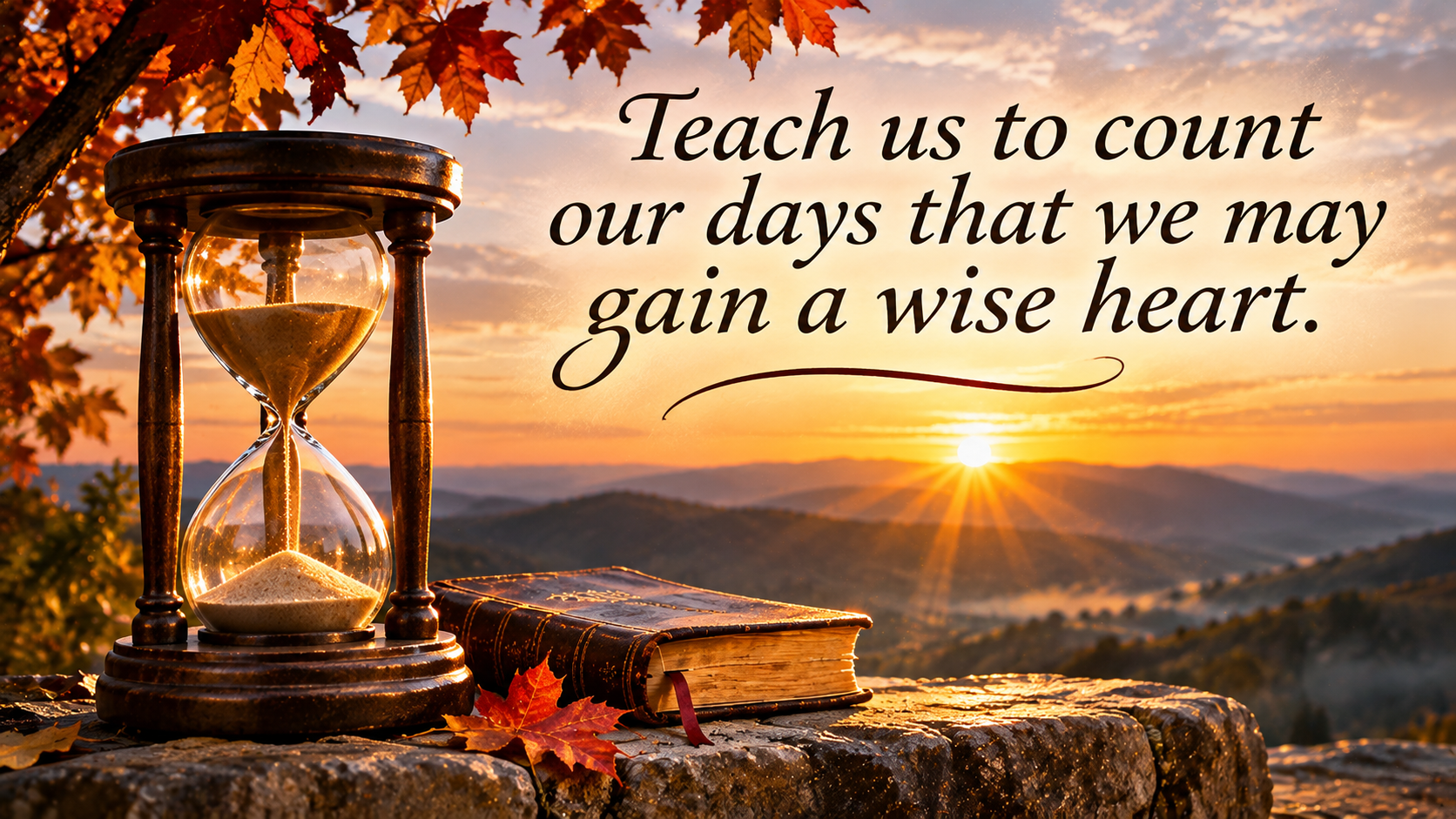
Maybe wisdom begins when we stop asking the passing things of this world to do what only God can do.
What are we chasing? What is the thing we secretly believe will finally make us happy? What accomplishment, possession, experience, relationship, or pleasure have we convinced ourselves we simply must have? And perhaps an even more important question is this: If we finally get it, how long will it be before we are still wanting more?
I invite you to listen to the song I wrote:
Our restless hearts are telling us something. Maybe we should listen.
Heavenly Father, You created my heart for You, yet I so often try to satisfy its deepest desires with the passing things of this world. Teach me to count my days wisely and to enjoy Your gifts without confusing them with You. Satisfy me with Your steadfast love. When my heart becomes restless and begins searching for something more, remind me that what I am truly searching for is You. May my restless heart finally find its rest in You. Amen.

AMDG
AMDG is a Latin abbreviation for “Ad Majorem Dei Gloriam,” which means “For the Greater Glory of God.”
I always love to hear from you. You can email me by clicking here.
Please take a moment to share your thoughts about today’s message below.

- I Had No Control Over That - November 16, 2026
- Still Wanting More - November 9, 2026
- An Appointment with God - November 2, 2026

Thanks so much Brian, We needed so very much. Seems I already said this,Barrie and Donna
You know, Brian, today’s message struck home probably more than any other. Things we feel we must have to be happy, to make our day, if only I could have this one beautiful something, I wouldn’t need anything else. It’s time for me to clean out and clean up. In many ways. Thank you.
Your Songs are Wonderful! I listen to them Over and Over again! A Great addition to your commentary! Thank you! God Bless you and your family♥️
I have heard it described as the “God Hole” it can only be filled by God in prayer and contemplation, amen 🙏