
Podcast: Play in new window | Download
Subscribe: Apple Podcasts | RSS
What do you say to God when you know exactly what He wants from you, but deep down inside, you don’t really want to give it to Him? We talk about surrender. We sing about surrender. We pray prayers of surrender. But what happens when we know what we should surrender while another voice inside us is still saying, “But I want this”?
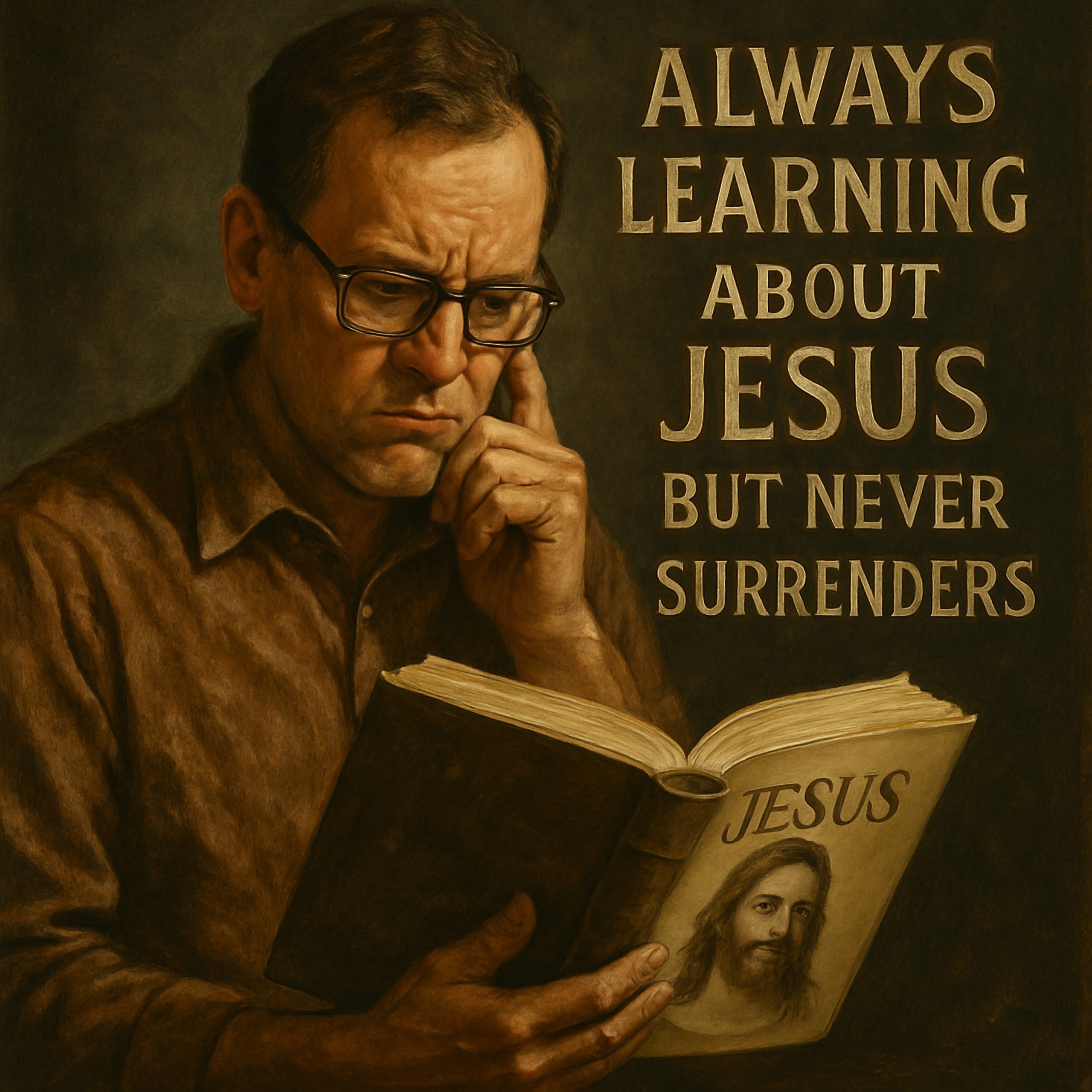
Bruce Marshall tells a fascinating fictional story in his novel To Every Man a Penny. A priest named Father Gaston is called in to hear the confession of a man facing the death penalty the following day. With only hours left to live, the man knows he should repent. The problem is that he cannot honestly say he is sorry. He remembers his amorous affairs and sexual encounters with pleasure. Even with death staring him in the face, he admits that, given the opportunity, he would still want more.
Father Gaston could have lectured him or pleaded for a repentance the man did not possess. Instead, he searches for the smallest opening in his heart. He asks, “Are you at least sorry that you are not sorry?” The man agrees. There it is—a tiny crack in the door. Beneath his desire for what he knows he should reject is another desire: the desire to want something different. God can work through the tiniest opening in our hearts—even the small desire to desire Him.

What strikes me most is that even though the man was approaching death, Father Gaston could not force this man to feel something he did not feel. Surely if fear alone could produce repentance, knowing tomorrow would be our last day should do it. Yet sometimes we can see the consequences clearly, know what we ought to do, and still want what we know we should surrender.
Before we judge this man too harshly, perhaps we should admit that there is a little of him in all of us. I am sure there are things in all of our lives that we know have too much power over us. Maybe it is money, success, fame, recognition, alcohol, food, lustful thoughts and actions, anger, resentment, an unhealthy relationship, the need to be right, or the need to be in control.
Yet if we are completely truthful, there are times when we still want these things. We know what surrender would look like, but knowing and wanting are not the same thing. Sometimes we find ourselves standing before God unable to say, “Lord, take this from me,” because another part of us is still saying, “I want this.” St. Augustine’s famous line comes to mind: “Lord, give me chastity, just not yet.”
Maybe the most truthful prayer we can offer is simply, “Lord, make me willing to be willing.”

Although the circumstances are different, I hear a similar honesty in the Gospel of Mark. A desperate father brings his son to Jesus seeking healing. Jesus tells him that everything is possible to one who has faith, and the father responds, “I believe; help my unbelief!” (Mark 9:24). He brings Jesus both his belief and his unbelief.
Perhaps we can do the same with our willingness. We can bring God the part of us that wants to follow Him and the part that resists. God already knows both are there.
We can all begin our day with a simple prayer like this: “Lord, I offer You my prayers, works, joys, and sufferings of this day.” With these words we place the entirety of our day before the Lord. Through this prayer, we offer God our complicated selves. We offer Him the parts He desires and the parts we are not sure we are willing to let go of. We offer Him the parts that want freedom and the parts that still cling to captivity.

This is not an excuse to remain where we are. It is a truthful first step toward allowing God to change us. Perhaps genuine surrender begins there—not with pretending or telling God what we think good Christians are supposed to say, but with bringing our resistance honestly into His presence. He already knows what we love, what we desire, what we cling to, and what we fear losing.
There may be something in your life today that you know God is asking you to surrender. Perhaps you are ready. If so, surrender it. But perhaps you know what you should want while another part of you still wants something else. Don’t run away from God because of that conflict. Bring the conflict to Him.
If you cannot yet honestly say, “Lord, take this from me,” then begin exactly where you are: “Lord, make me willing to be willing.”
Below is a song I wrote called “Willing to Be Willing.” I hope it speaks to your soul like it does to mine.
Perhaps holiness begins when we allow God into the complicated places we would rather keep hidden. Let us offer Him our prayers, works, joys, sufferings, desires, resistance, and even our unwillingness—our whole, complicated hearts.
Heavenly Father, You know what I freely surrender and what I still desperately want to hold onto. Give me the grace to be willing to be willing, and teach me to love You with my whole, complicated heart. Amen.
AMDG
AMDG is a Latin abbreviation for “Ad Majorem Dei Gloriam,” which means “For the Greater Glory of God.”
I always love to hear from you. You can email me by clicking here.
Please take a moment to share your thoughts about today’s message below.

- Yesterday’s Crooked Rows - October 23, 2026
- Have We Sanitized Death? - October 12, 2026
- Willing Enslavement - October 5, 2026

“Lord, Make Me Willing to be Willing”…you know, Brian, that says it all.
Thank you, Brian, for composing your message and your music in a way in which I get it. How refreshing.
Powerful, convicting, inspiring message and song❣️❣️
Linda
Thanks for your post and message.
Brian
You already know what I ask Him for and for 7 years I’ve received no answer as to what to do.
Jack
Sometimes when God’s voice seems silent or absent, the only prayer we can pray is, “Lord make me willing to be willing, even when I am unsure of what Your will is for me.” I am praying for you Jack.
Brian
Brian, you never fail to inspire, bring truth and always touch my heart! God bless you for your beautiful work and thank you for being an important light to my life.
Eileen.
Eileen
Thanks for your post. I am glad the Holy Spirit has touched your heart with this message.
Brian
Brian, you have touched my heart again! We did not talk about music in my life but it is a huge influencer for sure. I listened to your new song and finished with tears running down my cheeks! I am now a subscriber and one who “Likes” that song.
Thank you for all you have done for me through your gifts to Holy Cross Retreat house etc. in Easton MA and Cursillo retreats. You are well on your way to sainthood and I am praying for you!
Smitty
Harold
It is a blessing to see how the Holy Spirit can work though my music. May God’s blessing be with you.
Brian
Beautiful song you have written, who is the singer?
John
I wrote the song, then directed the sound style with an AI music program. The voice is also AI generated. I tell AI how I want the voice to sound, then it creates it.
Brian
“Somewhere in between the two is all I have to give.” What honest and beautiful words. They went straight to my heart. Thanks. God bless your ministry and you and your family.
Jim
Thank you. Blessing to you as well.
Brian
Brings my thoughts to Saint Paul: “I do not understand what I do. For what I want to do I do not do, but what I hate I do.”
Romans 7:14-25, Paul describing his internal struggle between his desire to follow God’s law and his tendency to sin. He expresses his frustration with this conflict, culminating in his cry for help in verse 24, followed by gratitude for salvation through Jesus Christ in verse 25. Sound teaching of yours confirmed by scripture 🙂
Marisa
Thanks for your post and the supporting scripture verse.
Brian
Every day . . . Many times every day I offer this prayer:
Look down upon me, O good and gentle Jesus.
I entrust myself to your care.
I surrender myself to your will.
Help me to believe that you CAN
and you WILL take care of everything!
Kathy
Thank you for sharing this beautiful prayer.
Brian
Awesome!
Marisa
Thank you!
Brian
Another one that hits home. Thank you Brian.
Sherri
Thank you for your post! I’m glad you found the message beneficial.
Brian
Beautiful words to your song! How powerful. So thankful for you and your ministry.
Kelly
Thank you for your kind post!
Brian